
How Brisbane’s Humid Climate Affects Your Artwork
Canvas Stretching vs Custom Framing:
What Does Your Artwork Actually Need?
If you’ve just picked up a canvas print, an original painting, or pulled an old artwork out of storage, you’ve probably asked yourself the same question we hear at I’ve Been Framed Springwood: do I need it stretched, framed, or both?
The short answer is that it depends on the piece — but the long answer is worth understanding, because getting it wrong can mean paying twice or, worse, damaging something that can’t be replaced. Here’s how to tell the difference and choose the right option for your canvas stretching or custom framing project.
Canvas Stretching Procedure
At I’ve Been Framed you can be assured that your canvas image will be taken care of. After the stretcher bar is cut to size and joined, the canvas will be laid face down on fabric and the stretcher bar then placed over it. The canvas will then be stretched using canvas pliers and then secured using galvanised staples. This is usually done by working from the centre of the canvas on each of the 4 sides. The corners are folded in under the canvas, which has a triangular finish to it on the edge of the canvas. This is done on the sides of the canvas, not the top and bottom.
When this is completed, I will then use wire and d hooks for hanging and bumpons on the bottom corners of the frame [stretcher bar] to allow for airflow and to keep the frame directly off the wall. Please note; if using 32mm or 38mm, I will screw the d hooks in the inside edge of the stretcher bar. This will allow for the frame to sit closer to the wall. When doing this, I will mount bumpons to the 4 corners of the stretcher bar.

What Canvas Stretching Actually Does
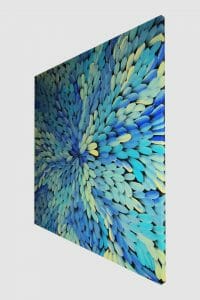
Canvas stretching is the process of mounting a loose or rolled canvas onto timber stretcher bars, pulling it evenly taut by using dedicated canvas stretching pliers, so the surface sits flat and smooth. This isn’t just cosmetic — an unstretched canvas left rolled or folded will develop creases and cracking in the paint or print layer over time, and once that damage sets in, it’s permanent.
A well-stretched canvas:
- Sits flat with even tension across the whole surface, with no sagging or rippling
- Protects the paint or ink layer from cracking at fold lines
- Is ready to hang immediately, with or without an additional frame
- This isn’t something that happens often, but the canvas can be re-stretched later if it loosens with age or humidity over time.
Do You Need a Frame As Well?
This is where the two services often get confused. A stretched canvas doesn’t need a frame to be complete — plenty of people hang a raw stretched canvas as-is. But there are two common upgrades:
Traditional frames fully enclose the canvas edges, similar to a framed print. These suit classic or heavily decorated pieces. You can then take it to the next level, add a matboard/s and glass. This will add to the aesthetics plus will give the artwork greater protection.
Floating frames leave a small gap around the canvas edge, so the entire printed or painted surface — including the wrapped sides — stays visible. This is the more popular choice for contemporary artwork and photography prints [on canvas], since it adds a finished, gallery-style edge without hiding any of the piece.
Whichever you choose, the floating frame depth needs to accommodate the thickness of the stretcher bars that has been used ie an 18mm float frame is designed to accommodate a canvas image stretched onto an 18mm stretcher bar.
There is another option, which is quite popular. If there hasn’t been enough canvas left around the sides of the image in order for it to be stretched, the canvas can be glued onto MDF and then framed. In doing this, only a few mm will be covered around the edges, under the rebate of the frame. Again, this can also have a matboard/s added to it, as well as glass, which will enhance the overall look of it and protect the image.
Why This Is Worth Getting Professionally Done
Stretching a canvas yourself is possible for a standard-sized, low-value print, but it gets risky quickly:
- Uneven tension causes visible wrinkles that can’t be fixed without re-stretching from scratch
- Over-tightening can stress the canvas fibres or cause the paint layer to crack
- Older or delicate artwork needs a gentler, condition-specific approach that’s hard to judge without experience
For anything with sentimental or monetary value — an original painting, a large-format print, or a piece you’ve had for years — professional stretching and framing removes the guesswork and protects the investment.
Looking After Your Framed Canvas
Once your canvas is stretched and framed, a little care keeps it looking right for decades:
- As with any artwork, keep it out of direct sunlight.
- Dust the image lightly using a feather duster, rather than wiping the canvas surface directly.
- If you do notice sagging or rippling, it can usually be re-stretched rather than replaced
Bring It In and We'll Talk You Through It
Every canvas is a little different — size, age, condition, and what you’re planning to do with it all affect the right approach. If you’re in Logan or anywhere across Brisbane’s southside, bring your canvas into our Springwood premises and I’ll have a look at it and talk you through your options, whether that’s a simple stretch, a full custom frame, or something in between.
We handle canvas stretching and custom framing alongside our certificate framing and memorabilia services, so if you’ve got more than one piece to sort out at the same time, we can take care of it all in one visit. Get in touch or call us on (07) 3290 0621 to have a chat about your piece.